"Did you vote today?" I, like most of us, heard this question countless times yesterday on November 8th, the day of the 2016 General Election. I actually didn't vote yesterday, but instead sent my absentee ballot back to my home (swing) state of Ohio by mail last week. This is the first election that I have been able to participate in and the whole process was actually pretty overwhelming. There is much to consider when filling out one's ballot; not just who to vote for as President of the United States, but which state representatives, county judges, and amendments to my village charter I want to support.

Despite feeling a little bit like 30 Rock's Kenneth in the above gif when first looking over my ballot, I voted according to the issues I support, using my values and my conscience as my guide. While this election cycle did not feature the ideal candidates in the opinion of many Americans, including myself, I still did feel proud to vote in my first election. I am truly grateful to live in a country where I can participate in my government in such a direct way.
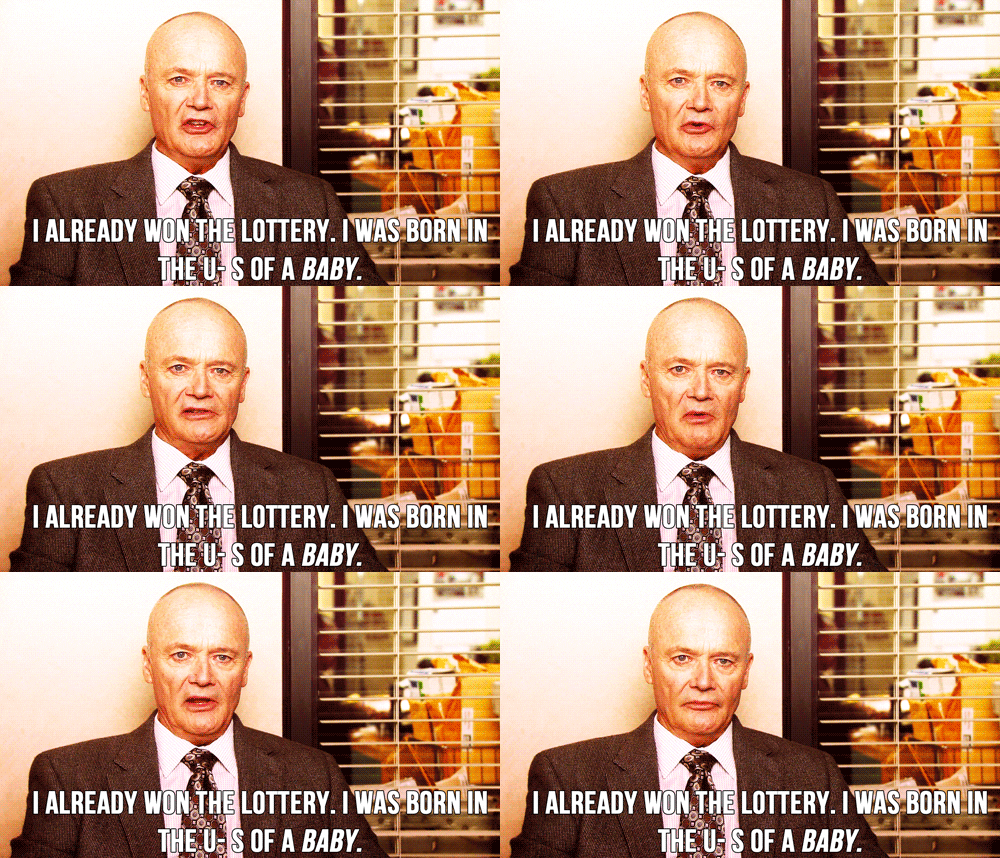
Patriotism and civic duty plays a large role in encouraging myself and other Americans to vote, but what about morality and religion? Do these convictions encourage people to vote? Gaudium et Spes makes it very clear that the Catholic Church enthusiastically encourages its members to take part in politics in the capacity their country allows. "All citizens," the council states, "should be mindful of the right and also the duty to use their free vote to further the common good" (75). Here is where the Church's push for political participation takes things one step further: the Church urges political participation not simply out of duty for one's country, but also, more importantly, out for duty for all of humanity. "Citizens must cultivate a generous and loyal spirit of patriotism, but without being narrow-minded" (75), argues the council. "This means that they will always direct their attention to the good of the whole human family, united by the different ties which bind together races, people and nations" (75). In this way, for the Church, one must vote according to their conscience and their morals in order to decide what will be best for their whole nation, not for their own self-interest.
So, participate in politics to to fulfill your duty as a citizen, but more importantly, vote to fulfill your duty to support and advance the common good. "All Christians," the council explains, have "their own specific vocation within the political community...It is for them to give an example by their sense of responsibility and their service of the common good" (75). More reason than any to let your voice be heard!


Erin- I think a lot of Americans felt the same way you did during this election. And, as a first time voter myself, I also felt proud to exercise this privilege that other countries are still struggling with. I think it was essentially that you brought up the point about participating in government to "advance the common good." Some people try to stay far away from Politics as they can, but as Gaudium et Spes reminds us that participating in politics is a way to help contribute to society, the government, and the common good as role-model Christians.
ReplyDeleteThis is great Erin! We have a duty to God to go out and vote, in the sense that voting can bring great change and great goodness to our nation. If we are to think of the best candidates with the best policies that align with God's will and Jesus' teachings, I hope more than enough hope for our nation's future!
ReplyDeleteGood job, Erin! I think it is definitely true that we have a duty to participate in politics because of how we deal with our fellow humans. The civic decisions we make in the USA affect other Americans, but also other nations and the overall thriving of humans. It's important that we participate so that our governments can genuinely reflect the will of the people.
ReplyDelete